

How Personality Tests Improve Daily Choices
Understanding how you tend to think, decide, and collaborate can transform everyday choices at work, in relationships, and in personal growth. These instruments draw on decades of trait theory, psychometrics, and behavioral research to translate patterns into accessible insights. Although popular culture often oversimplifies results, the best tools connect measurement to practical action without pigeonholing people.
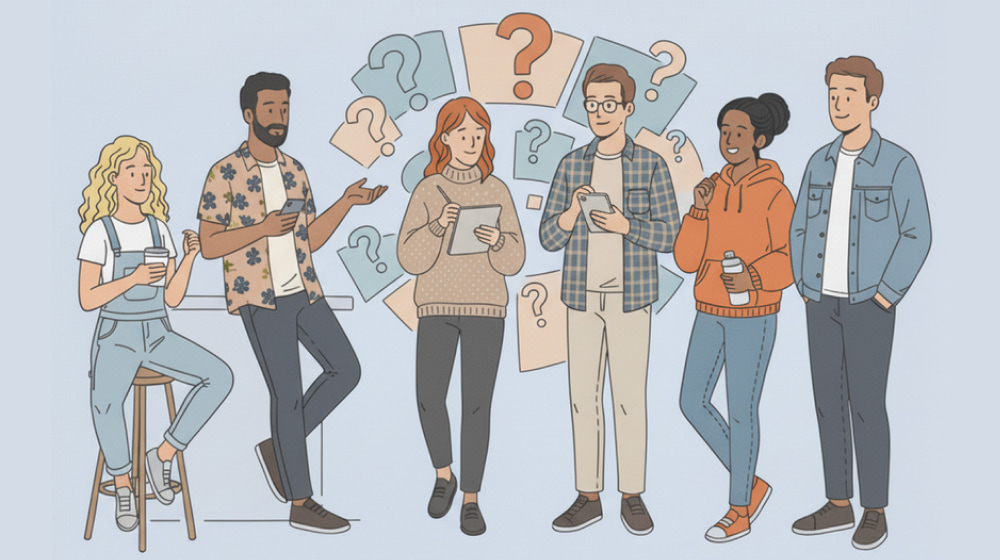
Some tools are light and reflective while others are validated and more rigorous, and a personality type quiz can serve as an approachable starting point for self-discovery. Many people start with personality tests and then move to tools with deeper validity evidence. Behind the scenes, good questionnaires rely on reliability metrics like test–retest stability and internal consistency, and they anchor items to constructs such as conscientiousness, extraversion, and emotional regulation. When items are well designed, they reduce bias from social desirability and the Barnum effect, making summary feedback more trustworthy.

Turn Traits into Success
For career planning and teamwork, interpretable language helps translate data into better everyday choices. In this context, curated reports that highlight blind spots and superpowers can clarify how to communicate, prioritize, and set boundaries, and they give managers a vocabulary to coach without stereotyping your personality type in rigid terms. Ultimately, a thoughtful process turns raw scores into habits, rituals, and experiments that improve outcomes over time.
Start the Test-
![]() Career development: align roles with enduring preferences and energy patterns.
Career development: align roles with enduring preferences and energy patterns. -
![]() Team dynamics: reduce friction by setting collaboration norms rooted in evidence.
Team dynamics: reduce friction by setting collaboration norms rooted in evidence. -
![]() Leadership coaching: translate feedback into concrete routines and micro-skills.
Leadership coaching: translate feedback into concrete routines and micro-skills.

Unlock Self-Knowledge Through Personality Insights
When used ethically and interpreted with nuance, these tools can accelerate clarity in domains ranging from hiring to conflict resolution. People often discover language for strengths they had sensed but could not articulate, and that “name it to tame it” moment fuels behavioral change. In reflective journaling, I-statements and situational examples help ground insights, and that framing can make reflections about my personality type feel constructive rather than confining.

Self-knowledge also scales when organizations adopt a consistent language for feedback. Coaching conversations feel less personal and more process-oriented, which improves psychological safety, and that tone helps people explore questions like whats my personality type with curiosity rather than anxiety. Many frameworks cluster traits into clear patterns that aid decision-making, and teams often reference models that organize preferences into 4 quadrant personality types to streamline communication, handoffs, and meeting design.
Big Five, MBTI, DISC: Which Personality Tool Fits You?
Different instruments serve different purposes, so the most helpful approach begins by clarifying your goal, time constraints, and desired level of rigor. For lightweight reflection and vocabulary building, brief questionnaires are efficient, whereas research-grade inventories offer deeper precision and stronger validity evidence, and a personality types test may sit anywhere along this spectrum depending on its design. As you compare options, look for plain-language reports, transparent scoring, and clearly defined constructs that map to real behaviors.
| Framework | Core Focus | Strengths | Best For |
|---|---|---|---|
| Big Five / OCEAN | Trait continuums (e.g., openness, conscientiousness) | High validity; research-backed; nuanced profiles | Coaching, hiring, academic study |
| MBTI-style typologies | Preference pairs and cognitive orientation | Accessible language; team-friendly narratives | Workshops, team building, self-reflection |
| DISC and similar | Behavioral tendencies in workplace contexts | Actionable tips; communication planning | Sales, management training, conflict mediation |
| Short quizzes | Rapid snapshots and on-ramps to deeper tools | Quick engagement; easy to discuss, and a personality profile quiz helps participants warm up | Orientation sessions, icebreakers, light discovery |
Interpreting results responsibly means distinguishing preferences from fixed abilities and remembering that context influences behavior. Good feedback encourages experiments, such as trying a new meeting role or time-blocking method, and then observing outcomes to refine habits, and that iterative loop works well even with a personality test free option that provides only a concise summary. Over time, the combination of data, journaling, and feedback from peers produces a living profile that evolves as roles and environments change.
Begin Your Personality Assessment
Start by defining why you are assessing yourself: clarity about decisions will guide the tool you select and the depth you need. If your resources are limited, it can be reasonable to begin with a personality type test free option and then graduate to a more robust inventory once your goals sharpen. Check for transparent documentation, clear scales, accessible language, and advice that translates insights into next steps you can test this week.
Start the Test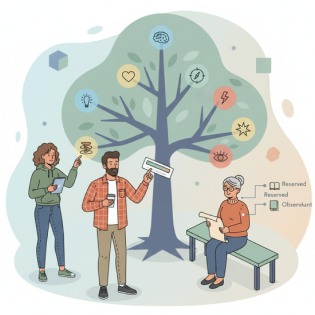
Take Personality Type Quiz With Instant Results
Get Started-
![]() Prefer instruments with published reliability and validity evidence.
Prefer instruments with published reliability and validity evidence. -
![]() Watch for barn-door statements that could apply to almost anyone.
Watch for barn-door statements that could apply to almost anyone. -
![]() Use multiple data points: peer feedback, work samples, and reflection.
Use multiple data points: peer feedback, work samples, and reflection.

Discover Your Personality Type
Ethical use centers on agency, consent, and context, not labels that box people in. In reflective conversations, ask open questions before assigning conclusions, and that stance helps you explore the feeling behind what personality type am i without overcommitting to a tidy category. Many providers now emphasize actionable coaching tips and built-in journaling prompts, and some platforms bundle a free personality test free results summary with optional deeper reports for those who want more detail.
Start the TestFAQ: Common Questions About Personality Assessments
- How accurate are these tools, really?Accuracy depends on construction quality, clarity of constructs, and the match between the tool and your use case. When options include technical documentation, you can review reliability statistics and sample items, and that data-driven approach will help you find your personality type with more confidence using methods aligned to your goals. Consistency across time and coherence with feedback from people who know you well are strong signals that a report is useful.
- Can results change over time?Most people show stable patterns on broad traits, but scores can shift with major life events, new roles, or deliberate practice. It is wise to revisit your profile after transitions and compare notes with mentors or managers to refine routines that fit your current context. Fresh evidence from real projects will tell you what has meaningfully moved.
- Which tool should I start with?Begin with your objective, time window, and need for rigor, then select a practical entry point. If you want structured guidance and proven constructs, an instrument marketed as a personality type test may provide a crisp path into trait-based language that scales to teams. For curiosity or icebreakers, a short questionnaire can still spark helpful reflection.
- Are free options worth trying?Free options are helpful for exploration, provided you treat outputs as hypotheses rather than verdicts. Many websites offer starter questionnaires that are quick to complete, and you can sample responsibly when you recognize that personality tests free tools vary in depth and measurement quality. If the summary resonates, consider following up with a validated inventory for important decisions.
- How should teams use results without stereotyping?Teams should translate insights into behaviors and agreements, not rigid labels. Ground norms in observable actions like meeting structure, feedback cadence, and decision-making roles to reduce misinterpretation. Rotating responsibilities and revisiting working agreements keeps the conversation dynamic and fair.
The Latest News
 The Complete Guide to Modern Personality Type Test Take Personality Type Quiz With Instant Results Get Started What Personality Test Reveals About Human Behavior Understanding why people think, decide, and collaborate the way they do starts with a clear framework that maps patterns in motivation and cognition. Across workplaces, cla...
 - 16 December, 2025
- Free Personality Type Test: Understand Yourself, Grow Faster, Decide Smarter Take Personality Type Quiz With Instant Results Get Started What Personality Assessments Measure and Why They Matter Understanding your habitual patterns helps you choose environments where you thrive, relationships that energize you, and careers that fit your strengths. Modern asse...
- 15 December, 2025
- The Science-Backed Guide to Personality Type Quiz Take Personality Type Quiz With Instant Results Get Started Why Understanding Personality Helps You Thrive Self-knowledge is a force multiplier for decisions, relationships, and well-being. When you understand your typical patterns, how you recharge, process information, make choice...
- 12 December, 2025
Please Note
This website (personalitytypequiz.us) is not an official representative, creator or developer of this application, or product. All the copyrighted materials belong to their respective owners. All the content on this website is used for educational and informative purposes only.